Mindframes Show Notes Obsession (2026)
Directed by: Curry Barker Written by: Curry Barker Starring: Michael Johnston, Inde Navarrette, Cooper Tomlinson, Megan Lawless, Andy Richter IMDB: https://www.imdb.com/title/tt37287335/
Episode Summary
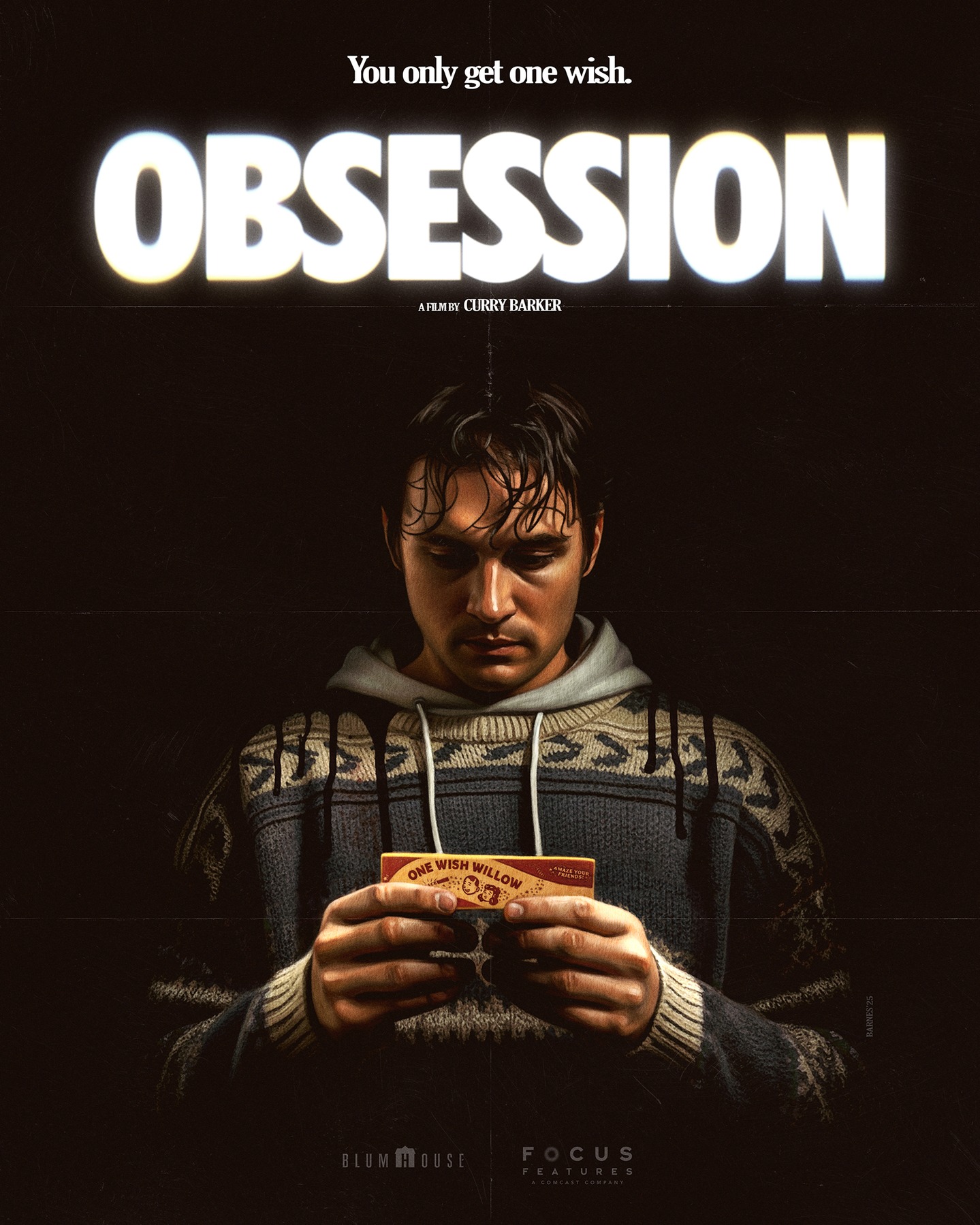
In this episode of Mindframes, Michael and Dave dig into Obsession (2026), Curry Barker’s micro-budget feature debut that turned into one of the biggest horror phenomenons in years — a $750K film bought for $15 million out of TIFF that went on to gross well over $148 million worldwide, growing at the box office in consecutive weekends rather than declining.
The discussion explores the film’s monkey’s-paw premise, its working-class Gen Z setting, the moral architecture of Bear’s wish, and the central question of whether Bear is the film’s actual villain — while comparing the film to Weapons, Pearl, Get Out, The Witch, and Isaac Asimov’s Foundation and Empire.
Thematic Discussion
Obsession explores consent and agency — what happens when desire is granted without consent.
The film suggests that Bear doesn’t earn or deserve Nikki’s love; he eliminates her will and replaces it with his own. As Curry Barker has put it, “love is earned, not demanded,” and “any time you wish for something, it’s probably going to be selfish.” The true engine of the horror isn’t the curse twisting the wish — it’s that the wish works exactly as asked.
On-air verdict — Is Bear the villain? Both hosts landed on no. He’s flawed, selfish, and prolongs the harm once he knows better, but he’s the story’s antagonist rather than its villain — if anyone is the “real” villain, it’s the cursed object itself. Michael’s framing: not every flawed person is a villain, and the film is more interesting because its characters are layered rather than purely good or evil.
On-air verdict — the ending. Dave correctly intuited that Nikki originally killed herself in an earlier draft — that actually was Barker’s original Romeo-and-Juliet mutual-suicide ending, before his playwright father pushed him toward the survival cut used in the final film. Michael argued the survival ending is more thematically persuasive: if the theme is one person’s coercion of another’s agency, the resolution should be Nikki’s, not a mutual destruction that treats the harm as shared. Bear’s selfishness has to die for Nikki to live.
A live reference worth flagging for listeners: Michael cited Naomi Serpell’s New Yorker piece “The New Literalism” (March 2025) as a framework for questioning how intentionally — and how literally — modern horror handles its themes of trauma and control.
⏱️ Timestamps Time Segment 00:01 Intro & setup 00:03 Director background — Curry Barker, box office story 00:09 Cinematography & cast discussion 00:30 Reviews & ratings 00:41 ⚠️ Spoiler section begins — “What would you wish for?” 00:44 Thematic discussion: consent and agency 00:45 Is Bear the villain? 01:01 The ending — survival vs. the original Romeo & Juliet cut 01:13 The New Literalism / intentionality debate 01:22 Closing thoughts & next episode 🎞️ Films & Directors Mentioned
- Weapons / Barbarian (Zach Cregger)
- Pearl (Ti West / Mia Goth) — Barker has cited this as a major influence
- Get Out (Jordan Peele)
- The Witch (Robert Eggers)
- Backrooms (Kane Parsons)
- Hurry Up Tomorrow (Jenna Ortega)
- Isaac Asimov’s Foundation and Empire
📬 Contact
🌐 https://mindframesfilm.com 📘 Facebook: Mindframes 🎧 Now Playing Network ✉️ info@mindframesfilm.com